What does uninsured motorist coverage mean in the legal space?

What does uninsured motorist coverage mean in the legal space?

In the legal space, “uninsured motorist coverage” refers to an insurance Policy provision that protects drivers when they are involved in an accident with a driver who does not have any insurance coverage. According to the Munley Law Glossary, this type of coverage ensures that the insured driver can receive compensation for damages and injuries when the at-fault driver is uninsured.

Understanding Uninsured Motorist Coverage

Uninsured motorist coverage involves several key aspects:

Protection Against Uninsured Drivers: This coverage provides financial protection when the other driver involved in an accident lacks insurance. It helps cover the costs of medical expenses, lost wages, and other damages resulting from the accident.

Coverage Limits: The amount of compensation provided by uninsured motorist coverage is subject to limits specified in the policy. These limits determine the maximum amount that the insurer will pay for claims involving uninsured drivers.

Types of Damages Covered: Uninsured motorist coverage generally covers damages such as medical expenses, lost income, pain and suffering, and property damage. The specifics of what is covered can vary depending on the policy.

Legal Contexts Where Uninsured Motorist Coverage Applies

Automobile Accidents: This coverage is particularly relevant in automobile accidents where the at-fault driver does not have any insurance. Uninsured motorist coverage helps cover the costs that would otherwise be borne by the insured driver.

Personal Injury Claims: In personal injury cases involving automobile accidents, uninsured motorist coverage can provide additional compensation to the injured party when the at-fault driver has no insurance.

Property Damage: Some uninsured motorist policies also cover property damage, including repairs to the insured vehicle or other damaged property.

Legal Implications of Uninsured Motorist Coverage

Policy Limits: The amount of uninsured motorist coverage is defined by the insurance policy. Drivers should review their policy limits to ensure they have sufficient protection.

Claims Process: To file a claim under uninsured motorist coverage, the insured typically needs to prove that the at-fault driver was uninsured. This involves providing documentation of the accident and evidence that the other driver lacked insurance.

Interaction with Other Coverage: Uninsured motorist coverage may work in conjunction with other types of coverage, such as underinsured motorist coverage or collision coverage, to provide comprehensive protection.

State Regulations: Insurance regulations, including requirements for uninsured motorist coverage, vary by state. Some states mandate that drivers carry this type of coverage, while others make it optional.

Role of Munley Law Glossary

The Munley Law Glossary offers definitions and explanations of insurance-related terms, including uninsured motorist coverage. This resource helps clients, attorneys, and other stakeholders understand the scope of coverage and its application in various legal and insurance contexts.

In the legal space, “uninsured motorist coverage” is an insurance provision designed to protect drivers when they are involved in an accident with a driver who has no insurance. This coverage helps cover medical expenses, lost wages, and other damages when the at-fault driver is uninsured. Understanding uninsured motorist coverage, as detailed in the Munley Law Glossary, is essential for ensuring adequate protection and navigating the claims process effectively.

What does compensable injury mean in the legal space?

What does compensable injury mean in the legal space?

In the legal space, a “compensable injury” refers to an injury or illness that qualifies the injured party, typically an employee, for compensation under workers’ compensation laws or other relevant legal frameworks. A compensable injury must meet specific criteria set by law or by an insurance Policy, making the injured party eligible to receive financial benefits, medical care, or other forms of compensation. The Munley Law Glossary provides a thorough explanation of this term, emphasizing its importance in personal injury and workers’ compensation cases.

What is a Compensable Injury?

A compensable injury is an injury or illness that occurs in a context that entitles the injured person to compensation. This term is most commonly used in the context of workers’ compensation, where it refers to injuries that happen in the course of employment and are covered by workers’ compensation insurance.

For an injury to be considered compensable, it typically must meet the following criteria:

Work-Related: The injury must arise out of and in the course of employment. This means the injury must occur while the employee is performing job-related duties or is on the employer’s premises during work hours.

Medical Documentation: There must be medical evidence that the injury exists and that it was caused by work-related activities. Medical reports, diagnoses, and treatment records are crucial in establishing the compensability of an injury.

Timely Reporting: The injury must be reported within a specific time frame, as required by workers’ compensation laws. Failure to report the injury promptly can result in the claim being denied.

Types of Compensable Injuries

Compensable injuries can vary widely depending on the nature of the work and the circumstances of the injury. Some common examples include:

Acute Injuries: These are sudden injuries that occur due to a specific incident, such as a fall, a machinery accident, or a vehicle collision while on the job.

Repetitive Strain Injuries (RSIs): These injuries develop over time due to repetitive motions or strain, such as carpal tunnel syndrome from typing or back injuries from lifting heavy objects.

Occupational Illnesses: These are illnesses that arise due to exposure to hazardous conditions at work, such as lung disease from inhaling toxic fumes or hearing loss from prolonged exposure to loud noise.

Psychological Injuries: In some cases, psychological or mental health conditions, such as stress-related disorders or PTSD, may be considered compensable if they result from work-related activities.

Importance of Compensable Injuries in Workers’ Compensation

Workers’ compensation laws are designed to provide financial and medical benefits to employees who suffer compensable injuries. The goal is to ensure that injured workers receive the support they need to recover and return to work, without having to engage in lengthy and costly litigation.

Benefits typically provided for compensable injuries include:

Medical Treatment: Coverage for all necessary and reasonable medical expenses related to the injury, including doctor’s visits, surgeries, medications, and rehabilitation.

Lost Wages: Compensation for a portion of the employee’s lost wages if they are unable to work due to the injury.

Disability Benefits: Payments to compensate for temporary or permanent disabilities resulting from the injury, based on the severity and duration of the disability.

Vocational Rehabilitation: Assistance with retraining or finding new employment if the injured worker is unable to return to their previous job.

Legal Challenges and Disputes

Determining whether an injury is compensable can sometimes lead to disputes between the employee and the employer or insurance company. Common issues include:

Disputes Over Causation: Employers or insurers may argue that the injury was not caused by work-related activities, making it non-compensable.

Pre-existing Conditions: If an employee has a pre-existing condition, it may be challenging to prove that the current injury is work-related and therefore compensable.

Reporting Delays: If the injury is not reported promptly, the employer or insurer may deny the claim, arguing that the delay casts doubt on the injury’s work-relatedness.

Extent of Disability: Disagreements can arise over the extent of the injury and the resulting disability, particularly when determining the amount of compensation or benefits.

The Role of Munley Law Glossary

The Munley Law Glossary is a valuable resource for understanding complex legal concepts like compensable injury. It provides clear definitions and explanations, helping injured workers, legal professionals, and others navigate the intricacies of workers’ compensation and personal injury law.

A compensable injury is an injury or illness that entitles an individual to compensation under workers’ compensation laws or other legal frameworks. Understanding what constitutes a compensable injury is crucial for both employees and employers, as it determines eligibility for benefits and the scope of legal protection. The Munley Law Glossary plays an essential role in making these legal concepts accessible, empowering individuals to pursue their rights effectively within the legal system.

What does causation mean in the legal space?

What does causation mean in the legal space?

In the Legal space, “causation” refers to the relationship between an Action or event and the resulting effect or harm. It is a crucial element in both civil and criminal cases, where it must be established that the defendant’s actions directly caused the harm or damage suffered by the plaintiff or victim. The Munley Law Glossary offers a clear and concise explanation of causation, highlighting its importance in determining liability and achieving justice in legal proceedings.

What is Causation?

Causation is the legal principle that connects a defendant’s actions to the harm or damage experienced by the plaintiff. In legal terms, establishing causation involves proving that the defendant’s conduct was the actual cause (cause-in-fact) and the proximate cause (legal cause) of the injury or damage.

Cause-in-Fact (Actual Cause): This is also known as the “but-for” test. It asks whether the harm would have occurred “but for” the defendant’s actions. If the answer is no, then the defendant’s actions are considered the cause-in-fact of the harm.

Proximate Cause (Legal Cause): Proximate cause considers whether the harm was a foreseeable consequence of the defendant’s actions. It limits liability to those harms that are closely connected to the defendant’s conduct, rather than extending it to every possible consequence.

Importance of Causation in Legal Cases

Causation is vital in determining liability in legal cases. It ensures that a defendant is only held responsible for the harm that they directly and foreseeably caused. Without establishing causation, a plaintiff cannot successfully claim damages, even if they suffered an injury or loss.

Causation in Different Legal Contexts

Causation plays a role in various areas of law, including:

Personal Injury Law: In personal injury cases, such as car accidents or medical malpractice, the plaintiff must prove that the defendant’s negligence or wrongful act directly caused their injuries.

Criminal Law: In criminal cases, causation must be established to prove that the defendant’s actions led to the crime’s outcome, such as a death in a homicide case.

Product Liability: In product liability cases, causation must be shown to connect a defective product to the injury suffered by the consumer.

Challenges in Proving Causation

Proving causation can be complex, particularly in cases where multiple factors contribute to the harm or where the connection between the defendant’s actions and the injury is not straightforward. Challenges include:

Multiple Causes: When multiple parties or factors contribute to the harm, it can be difficult to determine which actions were the actual and proximate causes.

Intervening Causes: An intervening cause is an event that occurs after the defendant’s action and contributes to the harm. If an intervening cause is deemed unforeseeable, it may break the chain of causation, relieving the defendant of liability.

Complex Causation: In cases involving long-term or cumulative effects, such as exposure to hazardous substances, establishing a direct link between the defendant’s actions and the harm can be challenging.

Legal Tests for Causation

To address these challenges, courts use various tests to determine causation:

But-For Test: As mentioned earlier, this test asks whether the harm would have occurred but for the defendant’s actions.

Substantial Factor Test: Used when multiple causes contribute to the harm, this test asks whether the defendant’s actions were a substantial factor in causing the injury.

Foreseeability Test: This test considers whether the harm was a foreseeable result of the defendant’s actions, helping to establish proximate cause.

The Role of Munley Law Glossary

The Munley Law Glossary serves as a valuable resource for understanding complex legal concepts like causation. By providing clear definitions and explanations, the glossary helps individuals, whether they are plaintiffs, defendants, or legal professionals, navigate the intricacies of legal cases involving causation.

Causation is a fundamental concept in the legal space, connecting a defendant’s actions to the harm suffered by the plaintiff. It plays a critical role in establishing liability and ensuring that justice is served. Understanding causation, as explained by resources like the Munley Law Glossary, is essential for anyone involved in legal proceedings, whether in civil or criminal cases.

Pool Covers: The Ultimate Guide to Choosing the Right Cover for Your Pool

A pool cover is a protective layer that is placed over a swimming pool to keep debris out and to prevent accidents from happening. It is an essential accessory for any pool owner, as it helps to maintain the cleanliness of the pool and prolong its lifespan. Pool covers come in a variety of shapes and sizes, and can be made from different materials depending on the specific needs of the pool.

A sparkling pool surrounded by lush greenery and colorful umbrellas, with a clear blue sky and fluffy white clouds in the background

One of the main benefits of having a pool cover is that it helps to keep the pool clean and free of debris. Leaves, twigs, and other debris can easily accumulate in an uncovered pool, making it difficult to maintain and clean. A pool cover prevents this from happening, ensuring that the pool remains clean and hygienic. Additionally, a pool cover can help to reduce the amount of chemicals needed to keep the pool clean, as it helps to prevent evaporation and keep the water temperature stable.

Another important benefit of a pool cover is safety. A pool cover can help to prevent accidents from happening, especially with children and pets. It can also help to keep the pool secure and prevent unauthorised access. Overall, a pool cover is an important investment for any pool owner, providing both practical and safety benefits.

Types and Features of Pool Covers

A pool cover lies flat over a sparkling blue pool, secured at the edges. It features a durable, weather-resistant material and a sleek, modern design

Automatic Pool Covers

Automatic pool covers are a popular choice for pool owners who want to save time and energy. These covers are available in different sizes and shapes to fit different pool types. They are made of high-quality materials such as PVC and quad-core™ fabric that ensure durability and longevity. Automatic pool covers are easy to install and operate, and they come with a range of features such as remote control, automatic shut-off, and more.

Safety Covers

Safety covers are designed to provide an extra layer of protection for your pool. They are made of high-quality materials such as PVC and quad-core™ fabric that ensure durability and longevity. Safety covers are available in different sizes and shapes to fit different pool types. They are easy to install and operate, and they come with a range of features such as locking mechanisms, anchors, and more. Safety covers are an excellent choice for families with children or pets.

Thermal Blankets and Winter Covers

Thermal blankets and winter covers are designed to keep your pool warm and protected during the colder months. They are made of high-quality materials such as PVC and quad-core™ fabric that ensure durability and longevity. Thermal blankets and winter covers are available in different sizes and shapes to fit different pool types. They are easy to install and operate, and they come with a range of features such as UV protection, insulation, and more. Thermal blankets and winter covers are an excellent choice for pool owners who want to save energy and money on heating costs.

In summary, pool covers come in different types and sizes to fit different pool types. Quality and safety are essential features to consider when choosing a pool cover. Automatic pool covers, safety covers, and thermal blankets and winter covers are some of the most popular types of pool covers available in the market. PVC and quad-core™ fabric are some of the high-quality materials used to make pool covers. Blue and black are the most common colours used for pool covers.

Installation and Maintenance

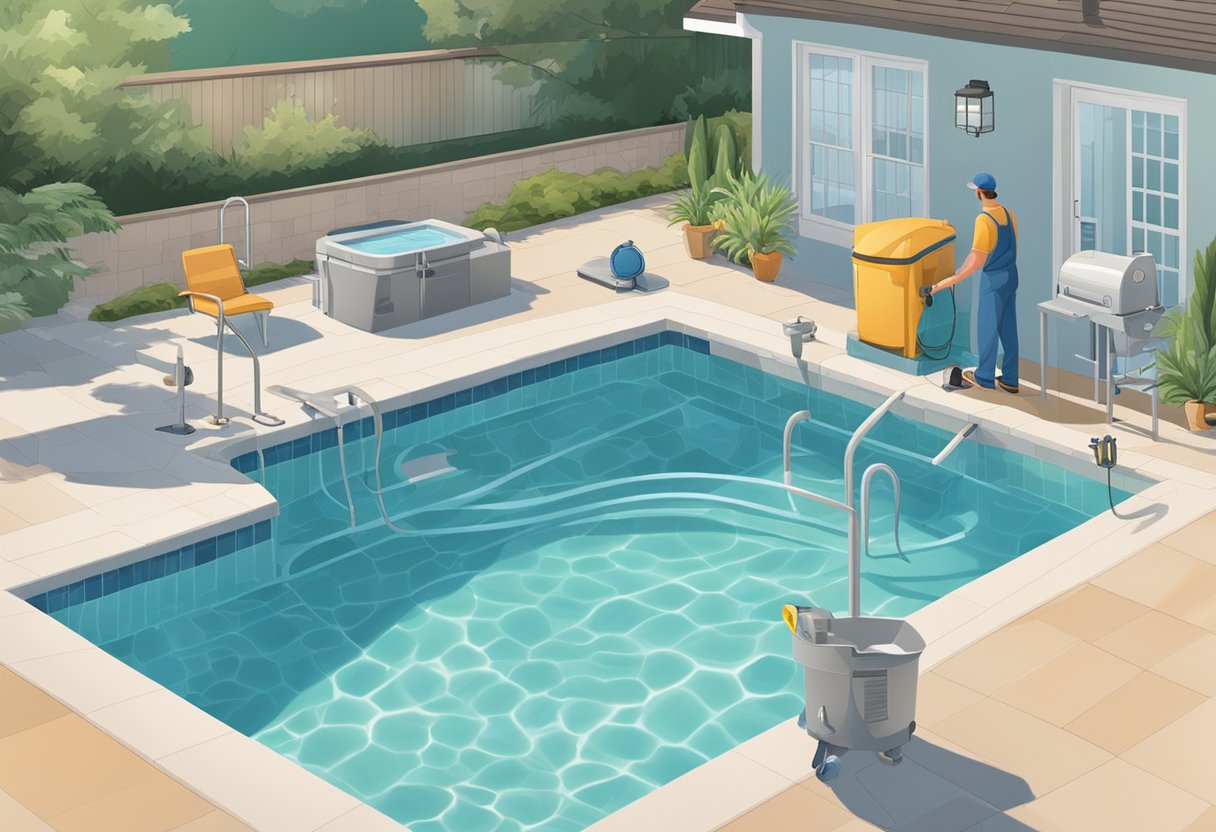
A technician installs and maintains pool equipment, surrounded by tools and machinery, with a backdrop of a clean and inviting pool

Measuring and Customisation

Before installing a pool cover, it is important to measure the exact dimensions of the swimming pool. This ensures that the cover fits perfectly, providing maximum protection and longevity. Cover manufacturers typically offer customisation Services to ensure the cover fits the specific shape and size of the pool.

For existing pools, the manufacturer will send a representative to measure the pool and provide a customised cover. For new pool construction, the manufacturer will work with the builder to ensure the cover is installed during the construction process.

Installation Services

Professional installation services are recommended for pool covers. This ensures that the cover is installed correctly, providing maximum protection and longevity. Many cover manufacturers offer installation services, which include support and customer service.

During the installation process, the cover is secured to the pool using a variety of support systems, such as straps, anchors, and tracks. The manufacturer will typically provide detailed instructions on how to install the cover, but professional installation services are recommended for optimal results.

Maintenance and Care

Regular maintenance and care are essential to ensure the longevity and effectiveness of pool covers. This includes removing debris from the cover, checking for water loss, and cleaning the cover as needed.

Manufacturers typically provide detailed instructions on how to care for the cover, including recommended cleaning products and methods. It is important to follow these instructions to ensure the cover remains in good condition and provides maximum protection.

In addition, many cover manufacturers offer maintenance and repair services to ensure the cover remains in optimal condition. This includes repairing any damage to the cover and providing support and customer service as needed.

Overall, proper installation, maintenance, and care are essential to ensure the effectiveness and longevity of pool covers. By following manufacturer instructions and utilizing professional installation and maintenance services, pool owners can ensure their covers provide maximum protection and longevity.

https://designercoverscapetown.co.za/


Understanding the Art of Custom Jewelry Making

The art of custom jewelry design Myrtle Beach involves a meticulous process of designing and crafting unique pieces that reflect the individuality and personal style of the wearer. A custom jewelry maker is responsible for creating customized jewelry that meets their clients’ specific needs and preferences. In recent years, there has been an increasing demand for custom engagement rings tailored to the couple’s tastes.

The first step in custom jewelry-making at Prinz Jewelers is understanding what the client wants. This involves sitting with them and discussing their ideas, preferences, and budget. Once this information has been gathered, the jeweler can sketch some initial designs. The designer will then work closely with their client to refine these ideas until they have a final plan that meets their requirements.

Once a design has been finalized, it is time to start crafting the piece itself. This typically involves selecting high-quality materials such as precious metals and gemstones. The jeweler will employ special tools and techniques to shape these materials into the desired form. Depending on the complexity of the design, this process can take anywhere from several days to several weeks.

Custom jewelry makers at www.prinzjewelers.com play an important role in personalized accessories by helping individuals create one-of-a-kind pieces that reflect their unique personalities and style. They collaborate closely with clients through the design process to ensure that every detail is perfect. Whether someone is looking for a custom engagement ring, dental gold, or just a special piece for themselves or a loved one, our skilled custom jewelry makers can help bring those visions to life in a way that cannot be achieved through mass-produced items purchased from traditional retailers.